
Leica M6 Review: Best 35mm Film Camera
The Leica M6 is the only 35mm film camera I currently own. After years of buying, selling, and collecting film cameras, the M6 put an end to my film experimentation. I believe it’s the best 35mm film camera ever made, and I’ll explain why.
My Leica Journey
The Leica M-A was my first Leica. I gifted it to myself after graduating college, using money I made buying, fixing, and selling film cameras I found at thrift stores at the time. I miss when film cameras were easy to come by in thrift stores.
After a couple of years with the M-A, I knew I wanted either an MP or an M6 for the built-in light meter. I was in no rush, but I checked Leica listings in my area daily. That habit led me to some great cameras along the way, including the M3 SS, M3 DS, M2, M4-P, M4-2, and M4.
Using all of those cameras taught me what I actually cared about. I love the film advance lever from the M-A and M3, the M4 quick rewind is genuinely fast and easy, and I prefer lower rangefinder magnification so I can comfortably shoot a 28mm.
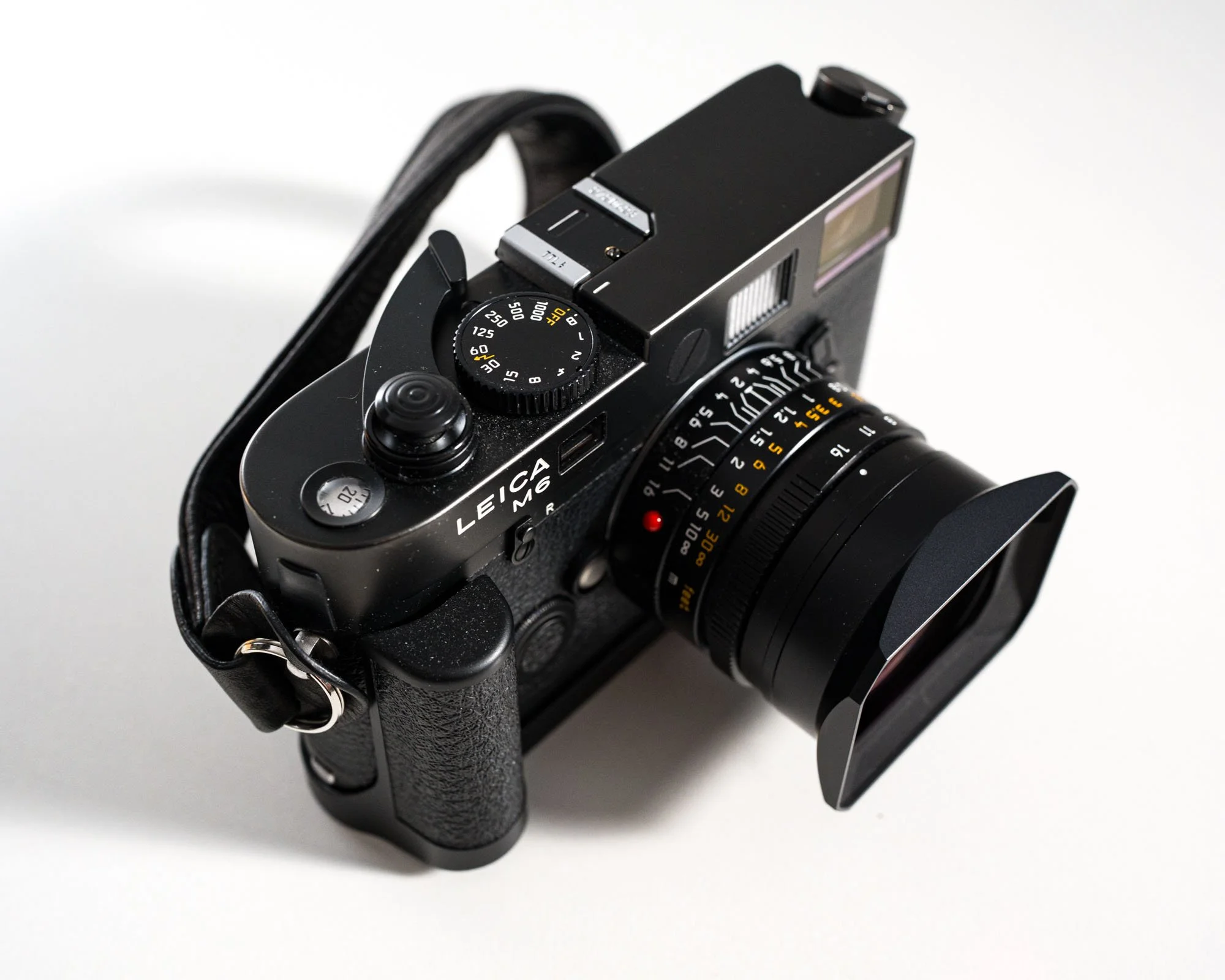
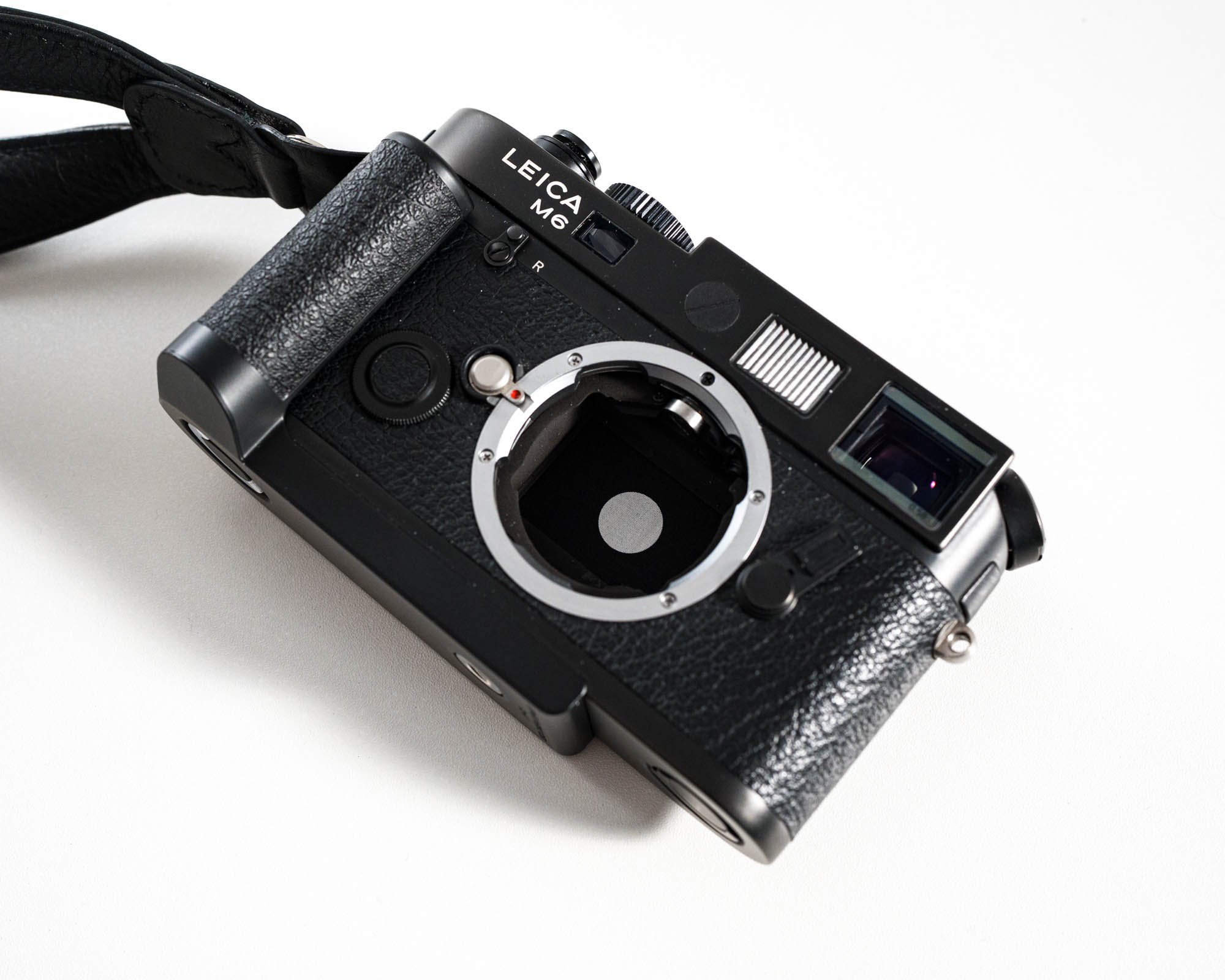
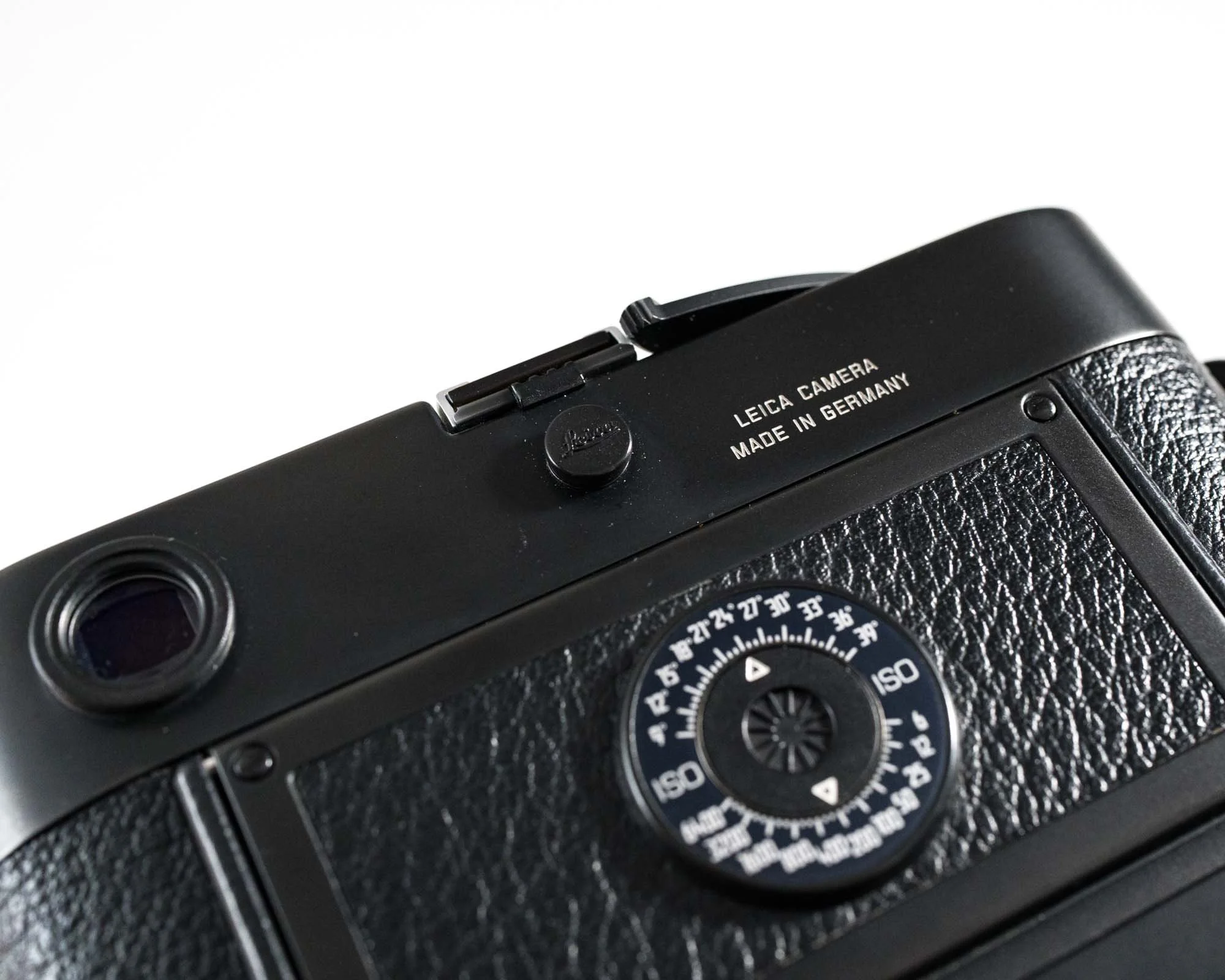
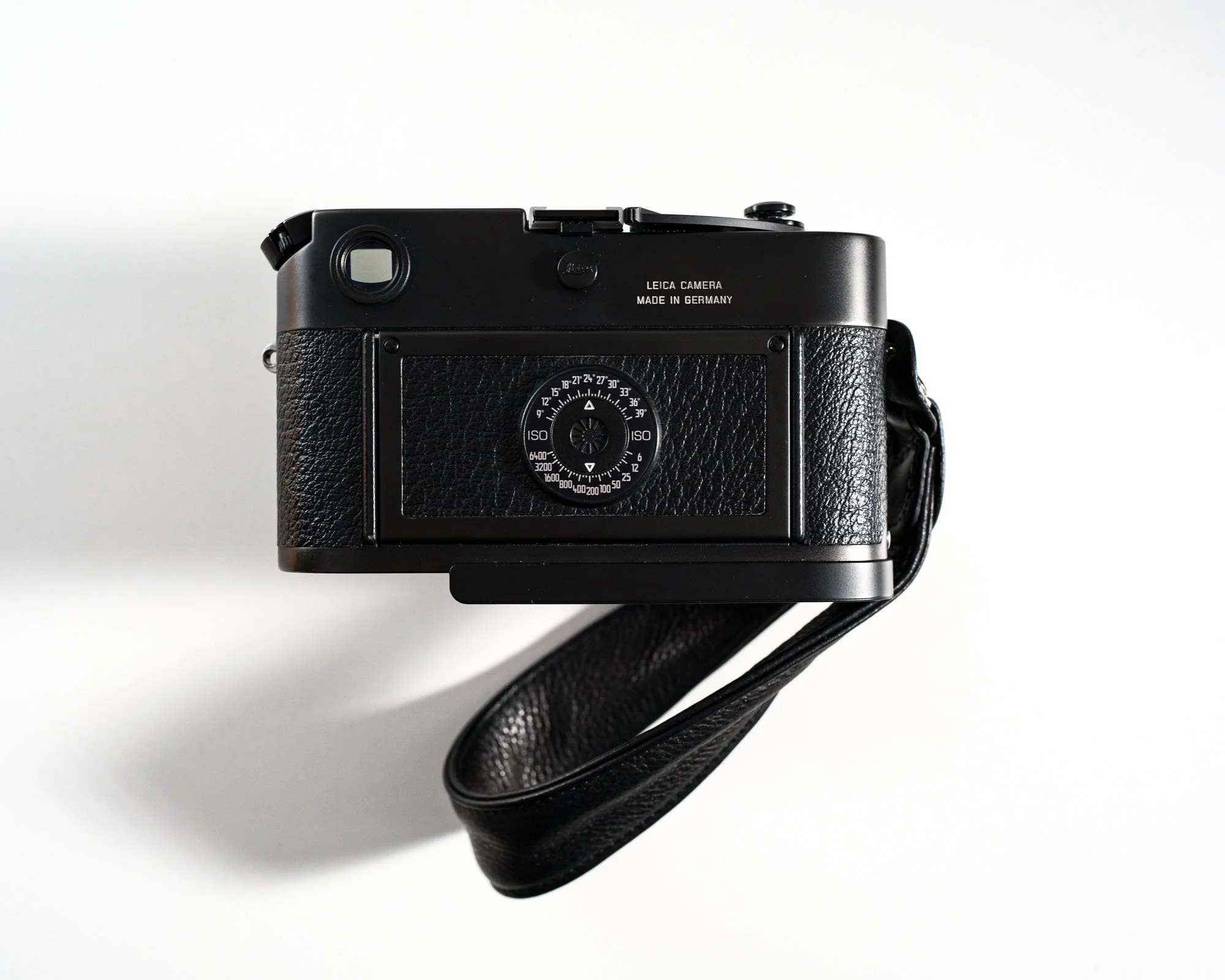
It was not until the beginning of 2025 that I found the Leica I had been waiting for, a Leica M6 TTL .58 in black chrome. The model mattered, but the journey mattered more. The enjoyment for me has always been finding a deal and then making the camera my own. After some negotiating, I bought this M6 for $1750. Yes, $1750 in 2025. Because the deal was so good, I decided all the money I had saved would go into modifying it exactly how I wanted. At the time, these cameras were consistently selling for over $3000, so I was comfortable spending around $1250 on upgrades which I’ll explain later.
That journey is a big reason this is my favorite Leica. Every time I pick up the M6, I think about my younger self working toward this camera. Beyond the sentimental value, I also want to explain what makes it such a perfect camera, even if you decide to skip the journey and buy one new today.
Build Quality and Design
When it comes to build quality, this camera is excellent. The main operations are fully mechanical, which means that if the battery powering the light meter dies, it is still a fully functional tool. This was one of the biggest things I was looking for in a forever camera. Many other 35mm film cameras rely on working electronics to function at all. Given the age and average lifespan of internal electronics, I did not want a camera that required batteries just to operate.
The materials are solid, both in construction and in feel. The camera feels extremely premium in the hand. Beyond that, it is well built internally and easily repairable. Knowing that if something goes wrong inside the camera it can likely be fixed is another major reason I enjoy using it. It is durable and serviceable.
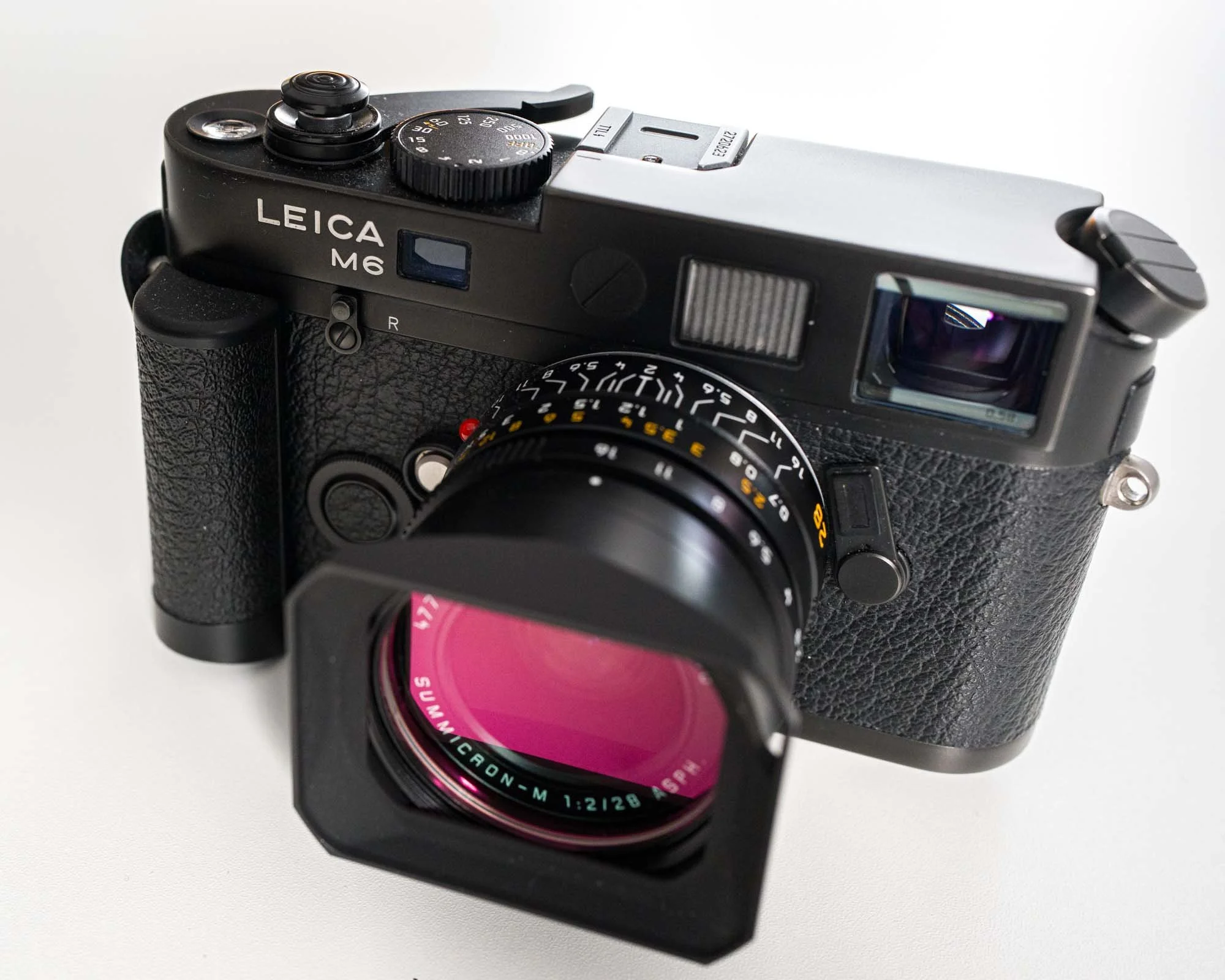
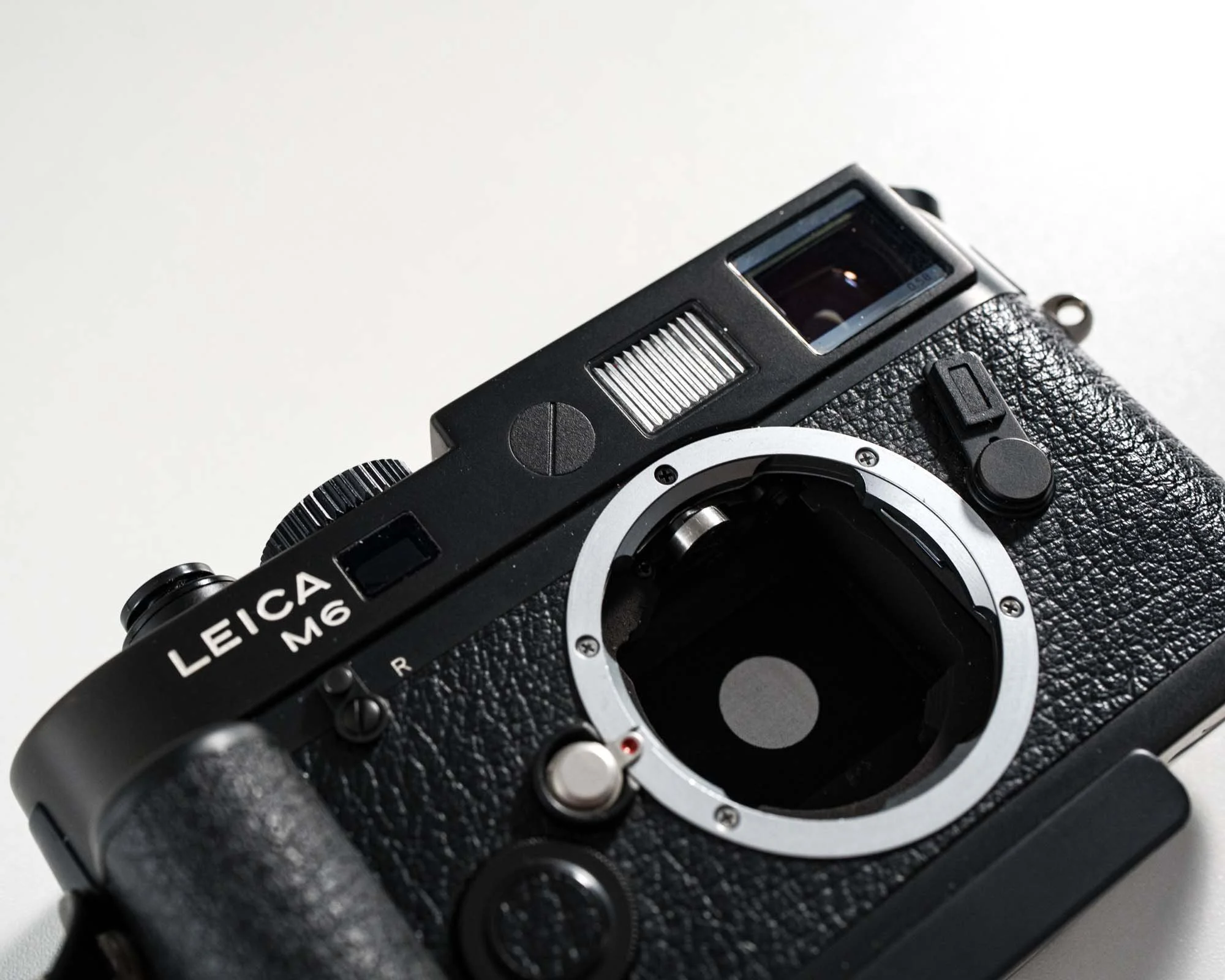
Design is subjective, but to me, it is beautiful. I like the look of many older film cameras, but I think this is the best. The way the rangefinder and lens catch the light, paired with the black chrome finish, looks incredible. It is simply a camera that is nice to look at.
The only real downside is that it is not especially ergonomic and it is heavy due to the all metal construction. That said, neither of these things has ever bothered me. It is more a note for those coming from an SLR with a proper grip and lighter weight.
Rangefinder
It is hard to recommend this camera if you have never used a rangefinder before. The focusing experience is completely different, and if this is your starting point, you will be spoiled by one of the best rangefinders ever made. Once you experience it, most other rangefinders will feel noticeably worse. Because of that, I actually think it makes sense to start with a lesser rangefinder to see if you even enjoy the experience, then move up to the Leica M6 to understand what makes it so special. This is one of the few pieces of gear where I genuinely recommend buying something worse before buying the best.
One of my favorite aspects of using a rangefinder is being able to see outside the frame. This lets me anticipate moments and time my shots better without pulling my eye away from the viewfinder or constantly adjusting my composition to see what is coming into frame. It allows me to stay inside the rangefinder and have a more pure photography experience.
Composing perfectly centered images is nearly impossible with a rangefinder. If you have ever used an instant film camera with an optical viewfinder and then watched the print come out with your subject slightly off center, that is what using a rangefinder can feel like at times. It can be frustrating, especially with something like architecture where lines are meant to be straight. At the same time, it has been a reminder to let imperfections and chance be part of my photography. It actually makes me press the shutter more, taking multiple variations of a scene in hopes of getting it perfect while also embracing the frames that are slightly off.
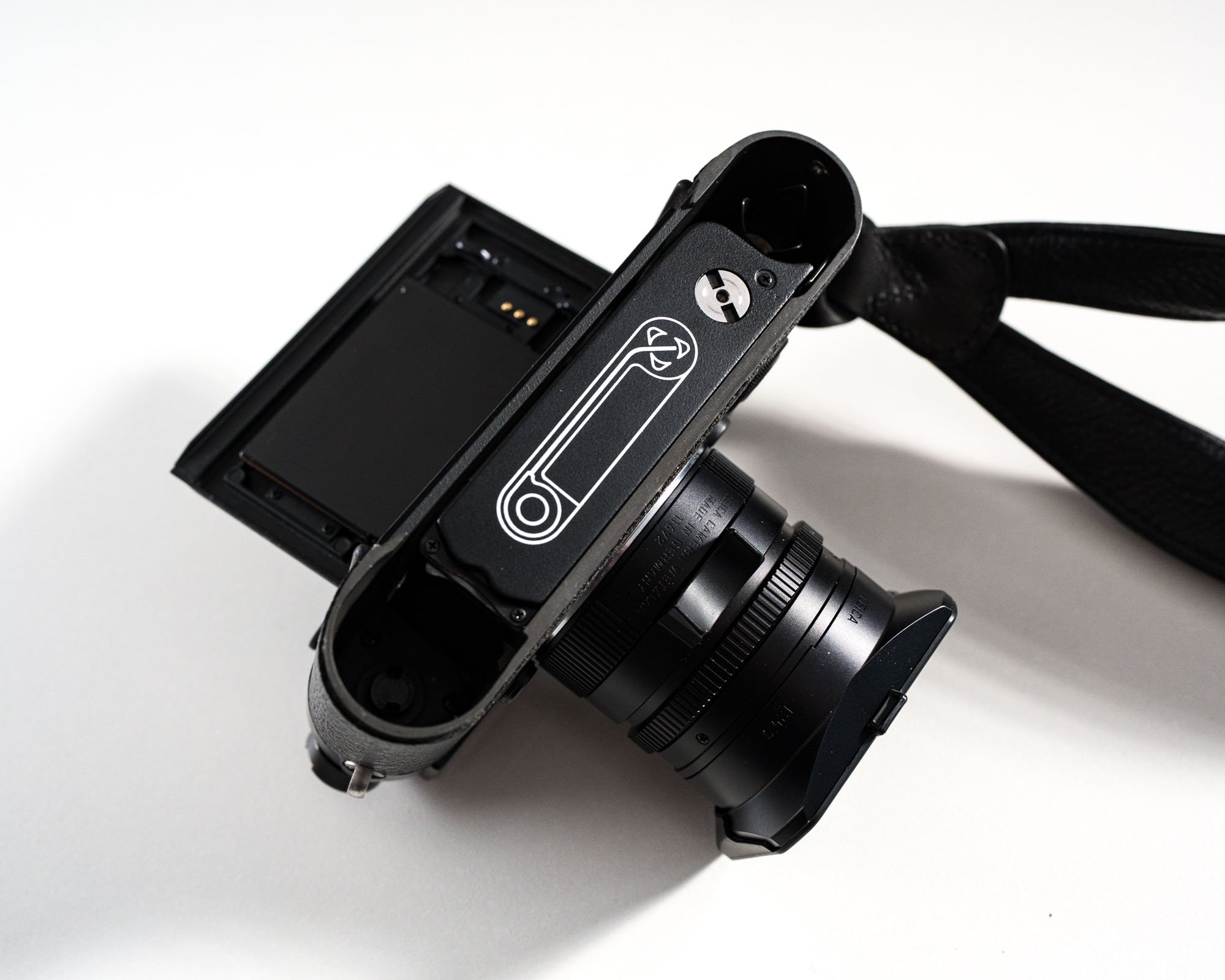
Film Loading
One of the things I love most about this camera is its unique loading system. It is another example of Leica doing things differently, but in this case there really are no other cameras to practice on. A lot of people do not take the time to learn how to properly load this camera, even after spending thousands of dollars, and they end up damaging it.
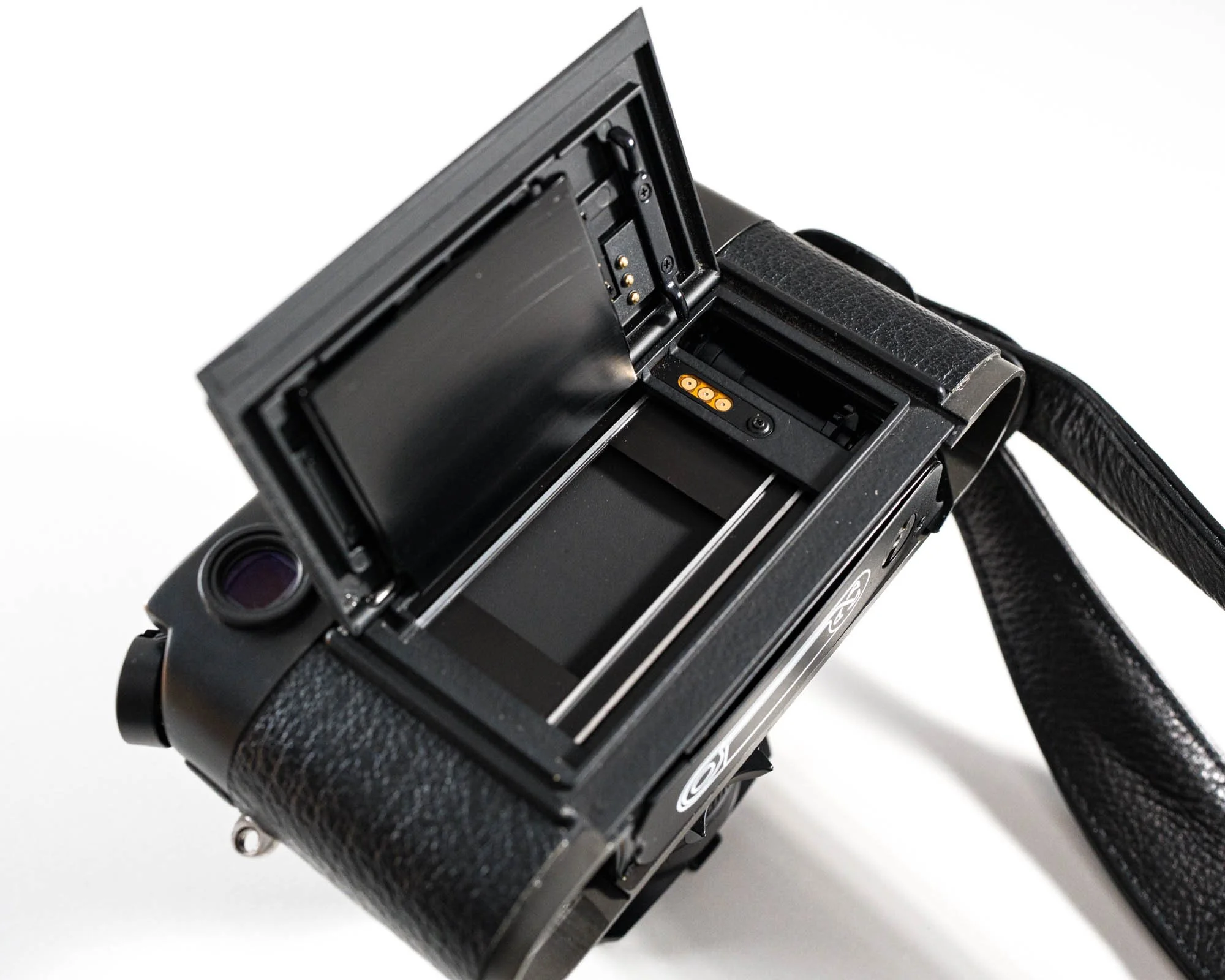
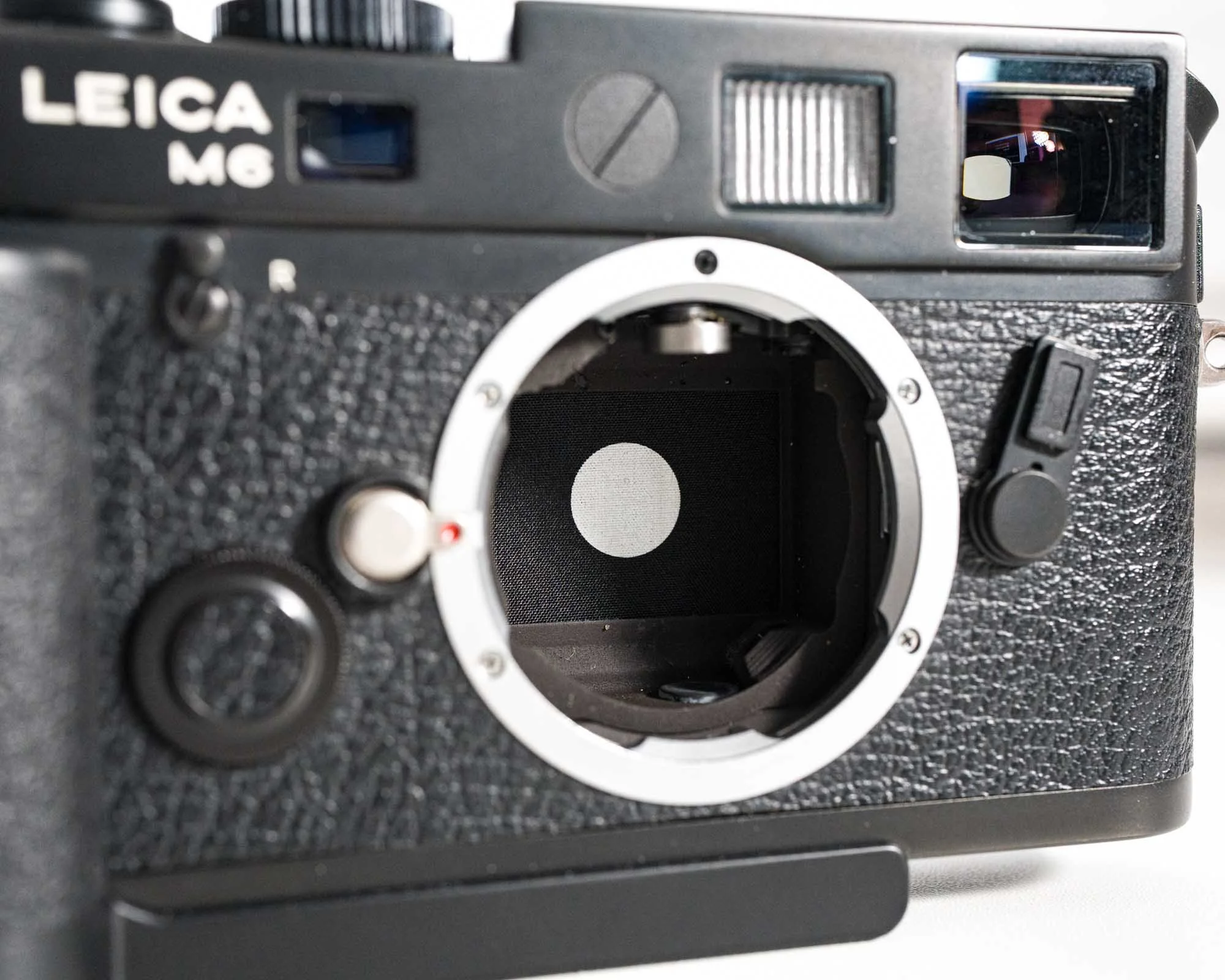
Leica designed the system so all you have to do is pull the film leader across to the other side of the camera and close it up. It is a true quick load system. There is no need to align the film with teeth. The base plate pushes everything into place.
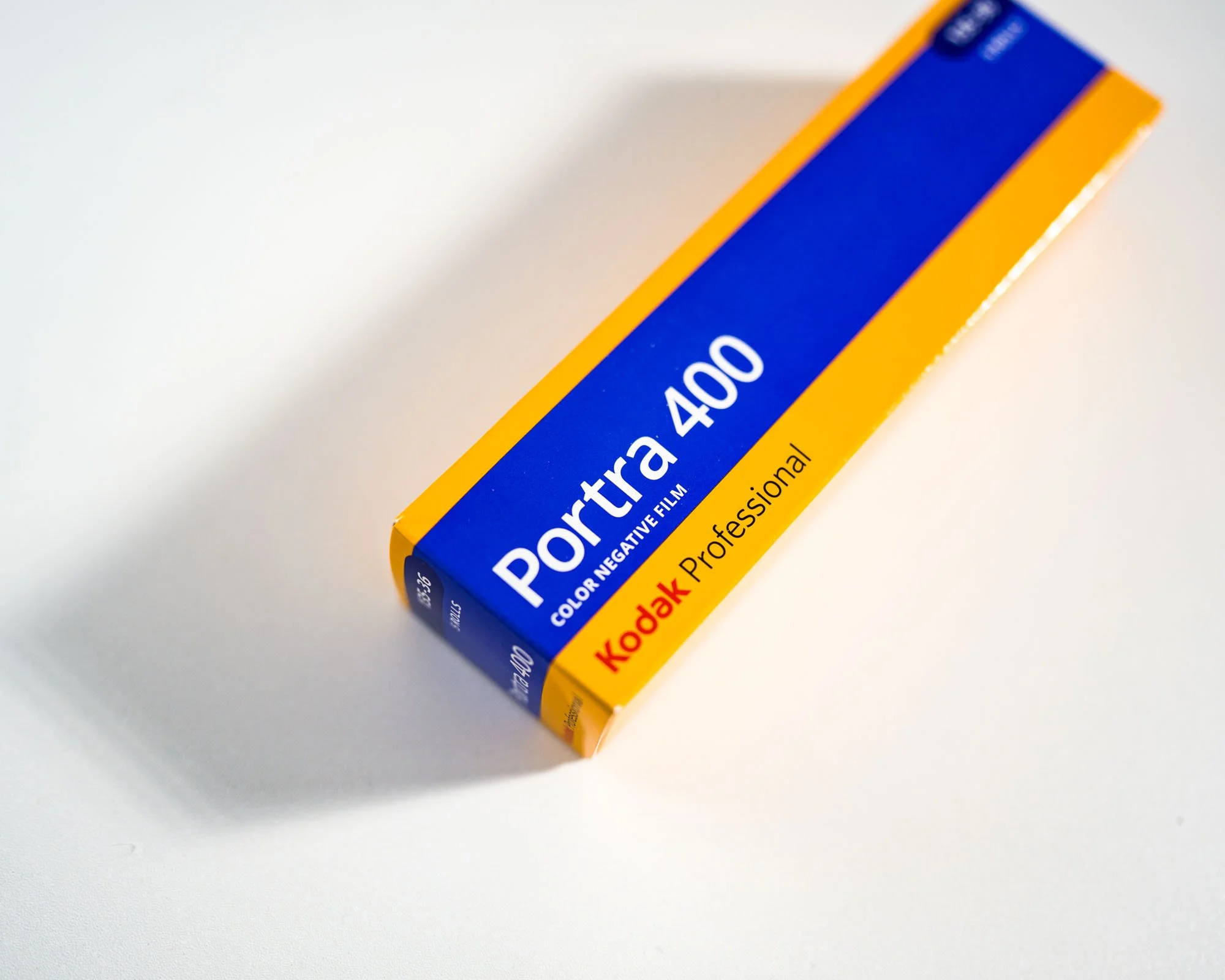
To make sure my roll is loaded correctly, I rewind the lever until I feel some tension in the film. Then I advance the frame one more time and watch the rewind knob. If the knob spins, the film is loaded properly with the right amount of tension. If it does not spin, I did not pull the film out far enough, which happens less than five percent of the time.
It genuinely hurts to see people pushing on shutter curtains to align the film or opening the back and exposing frames. Hopefully this helps a future owner understand the loading system and avoid damaging an otherwise incredible camera.
Battery Life
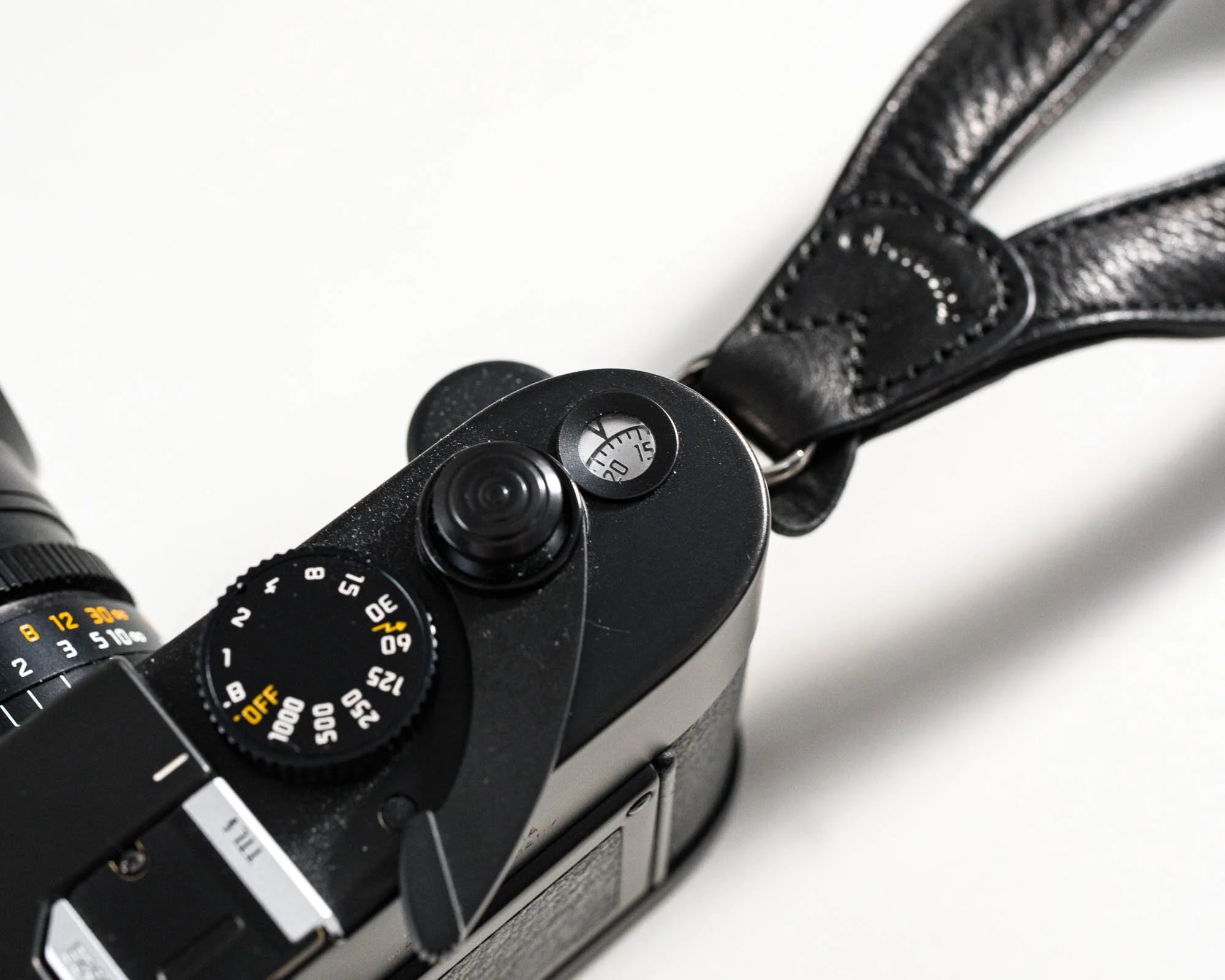
This camera has excellent battery life since the battery is only used for the light meter. Most of the battery drain complaints I see come from people who forget to turn the meter off. After every session, the camera should be set to bulb or off so the meter does not activate when it is not supposed to. If you remember to turn the camera off, the battery lasts an insanely long time.
Lenses
My only real hot take with the Leica M6 is this. If you do not own, or have no desire to use, Leica glass, I do not think the body is worth it. Yes, there are some excellent third party options, especially from Zeiss. But too many people spend all their money on the body, mount a very cheap lens, and then wonder why the camera does not focus correctly or why the images look soft. In many cases, the lens is not properly calibrated or the optics are simply not very good.
The body holds the film and fires the shutter, but the lens is what actually makes the image. Lens quality matters, and it is a major factor to consider when buying into this system. If you are thinking about an M6, make sure you have enough budget left for a good Leica lens or a well regarded and tested third party option like Zeiss.
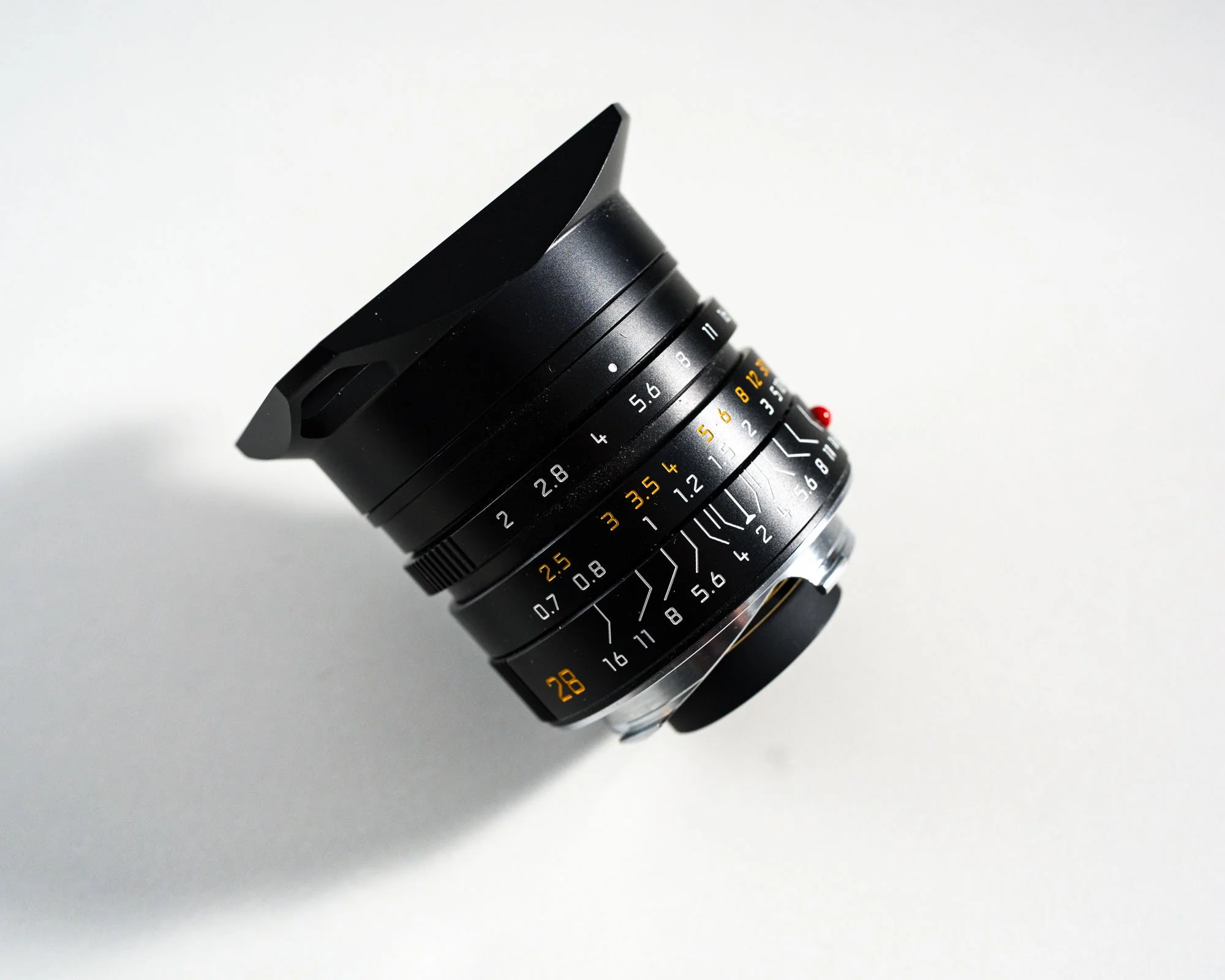
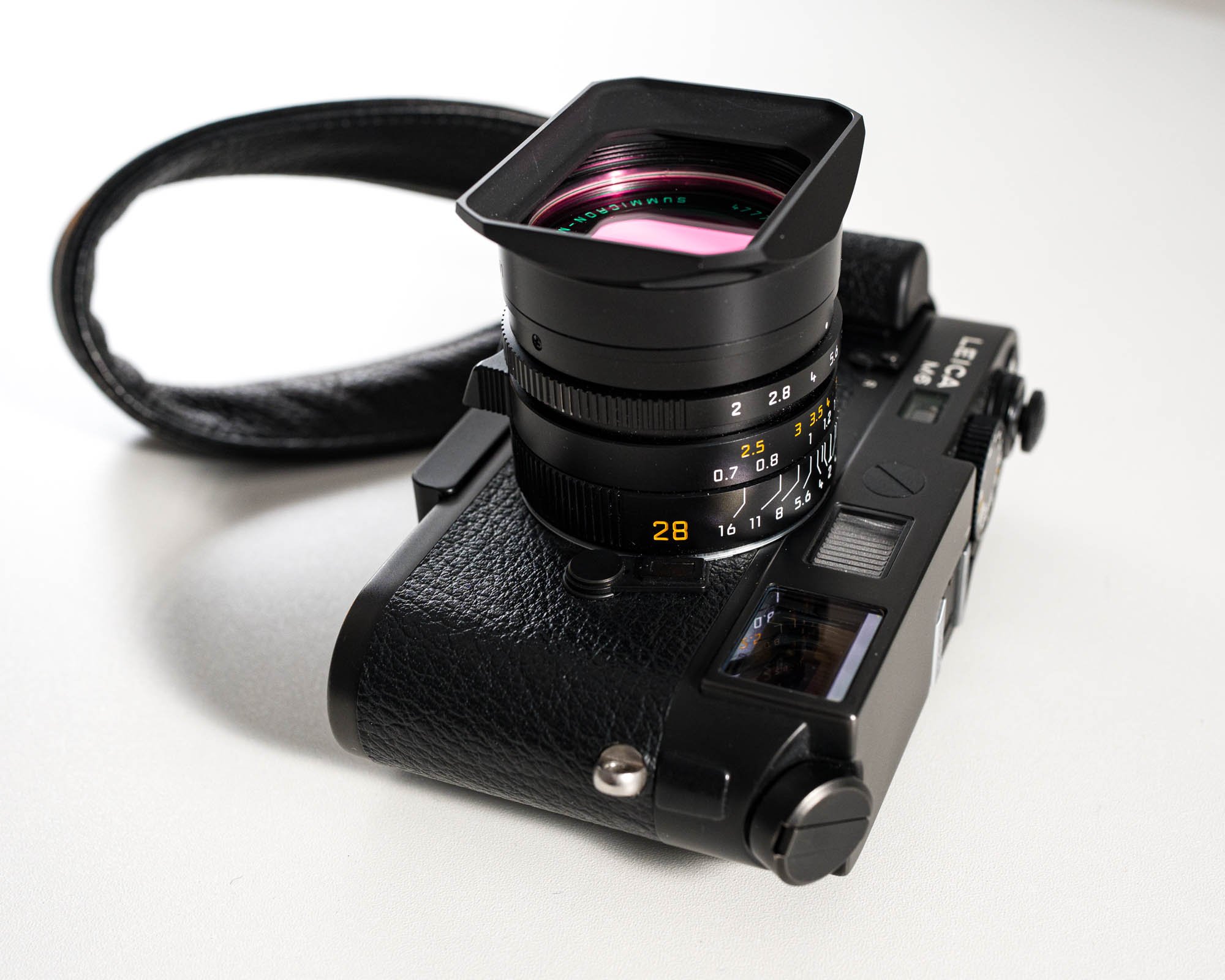
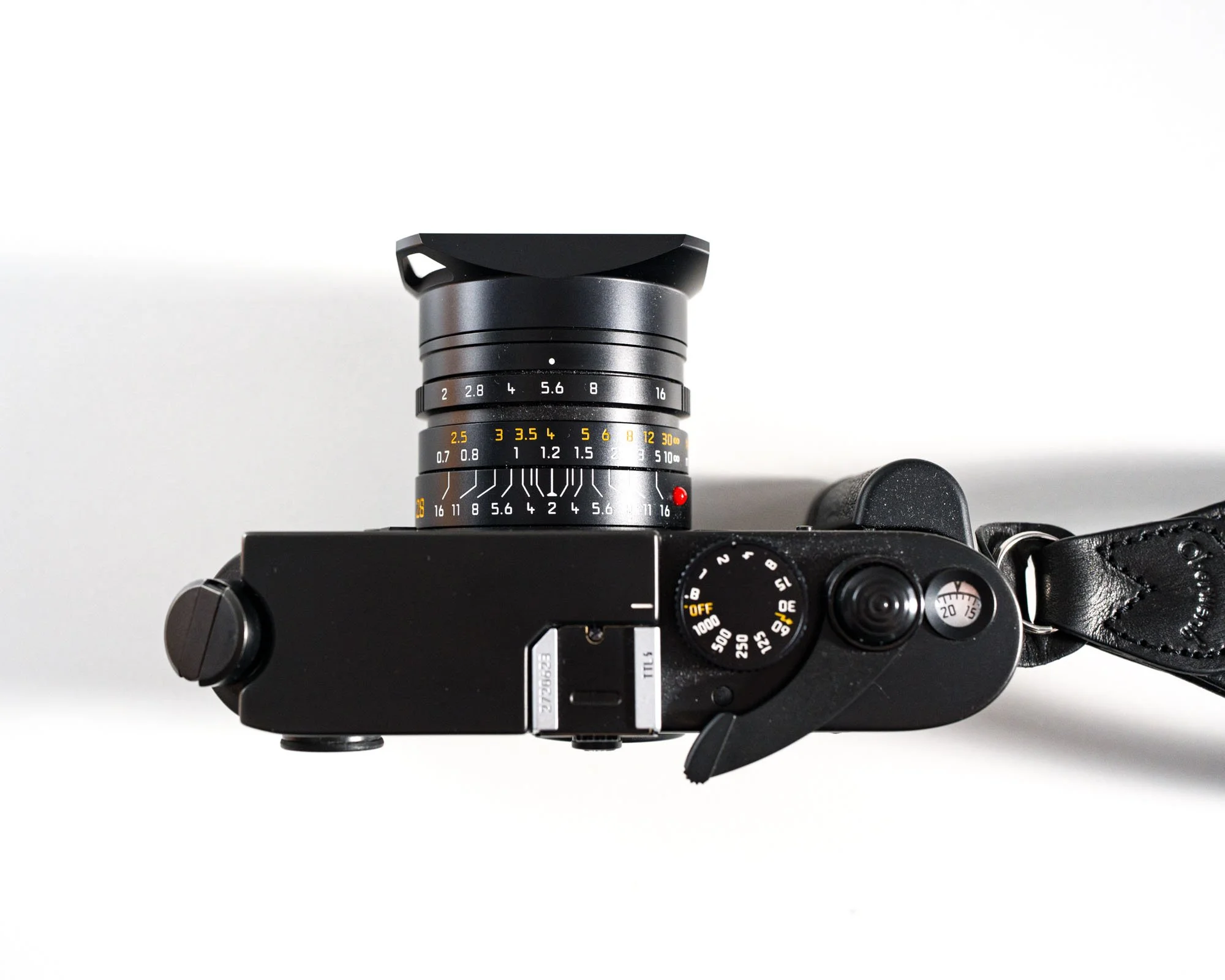
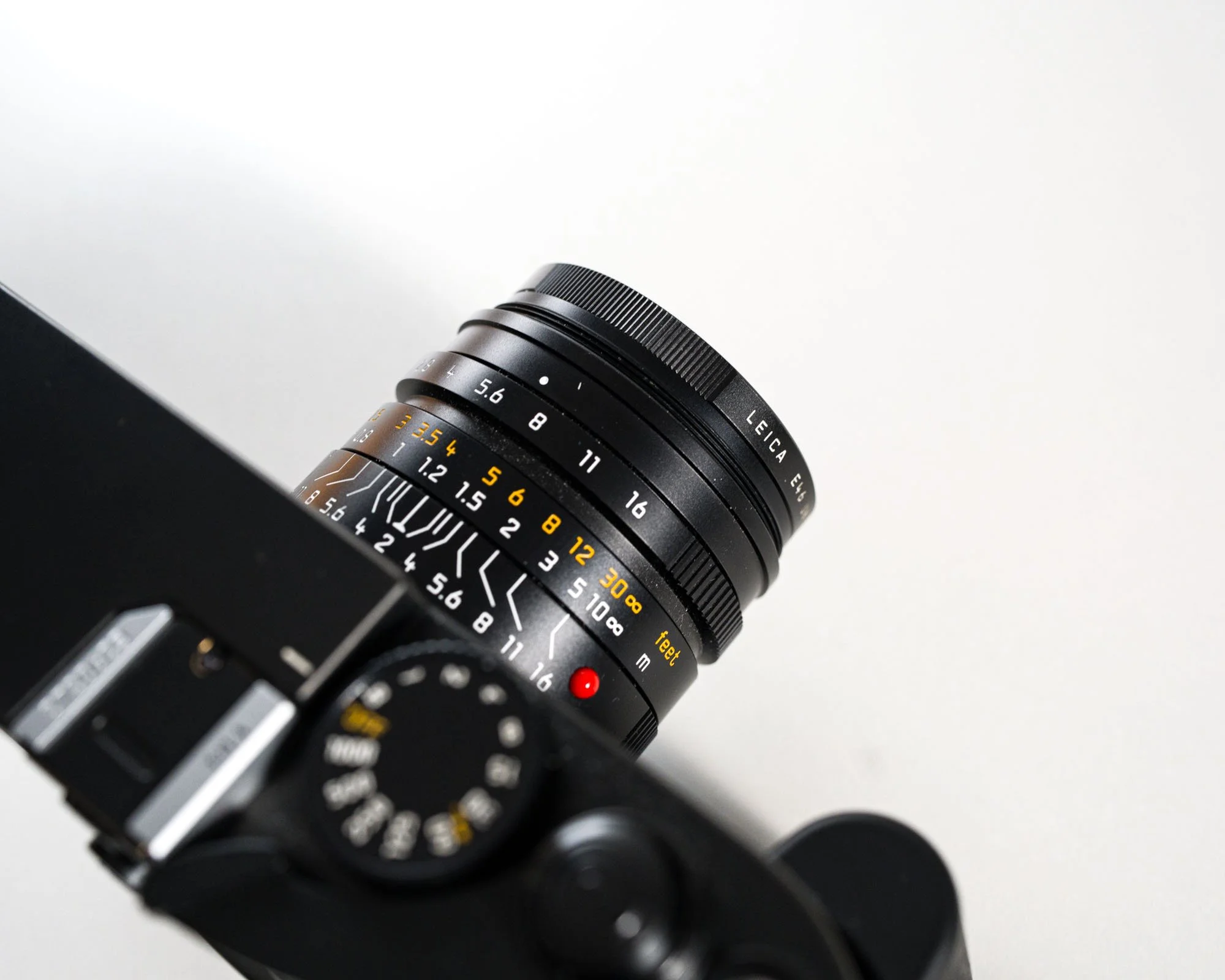
I only use one lens with the system which is the Leica Summicron 28mm ASPH. I like to maintain consistency in my film work, and this lens strikes the perfect balance between wide and standard perspectives. I might consider upgrading to a Summilux 28mm, but I do not think trying to focus at f/1.4 on a .58 viewfinder is very practical. This lens will be my go-to for the foreseeable future.
Zone Focusing
One of the joys of using a rangefinder is being able to zone focus without the viewfinder going blurry. If you take the time to understand the markings on the lens, it becomes easy to set the focus zone and then use the rangefinder simply as an optical viewfinder for composition. I zone focus with my Leica about 15 to 30 percent of the time.
I think it is a skill worth learning, and having a Leica lens with a focus tab makes it easy to remember the distances. For example, if I push the focus tab all the way to the right, the camera is set to infinity. This has saved me in a number of occasions where I couldn’t take the time to focus and had to rely on my knowledge to snap to the focus area.
Flash
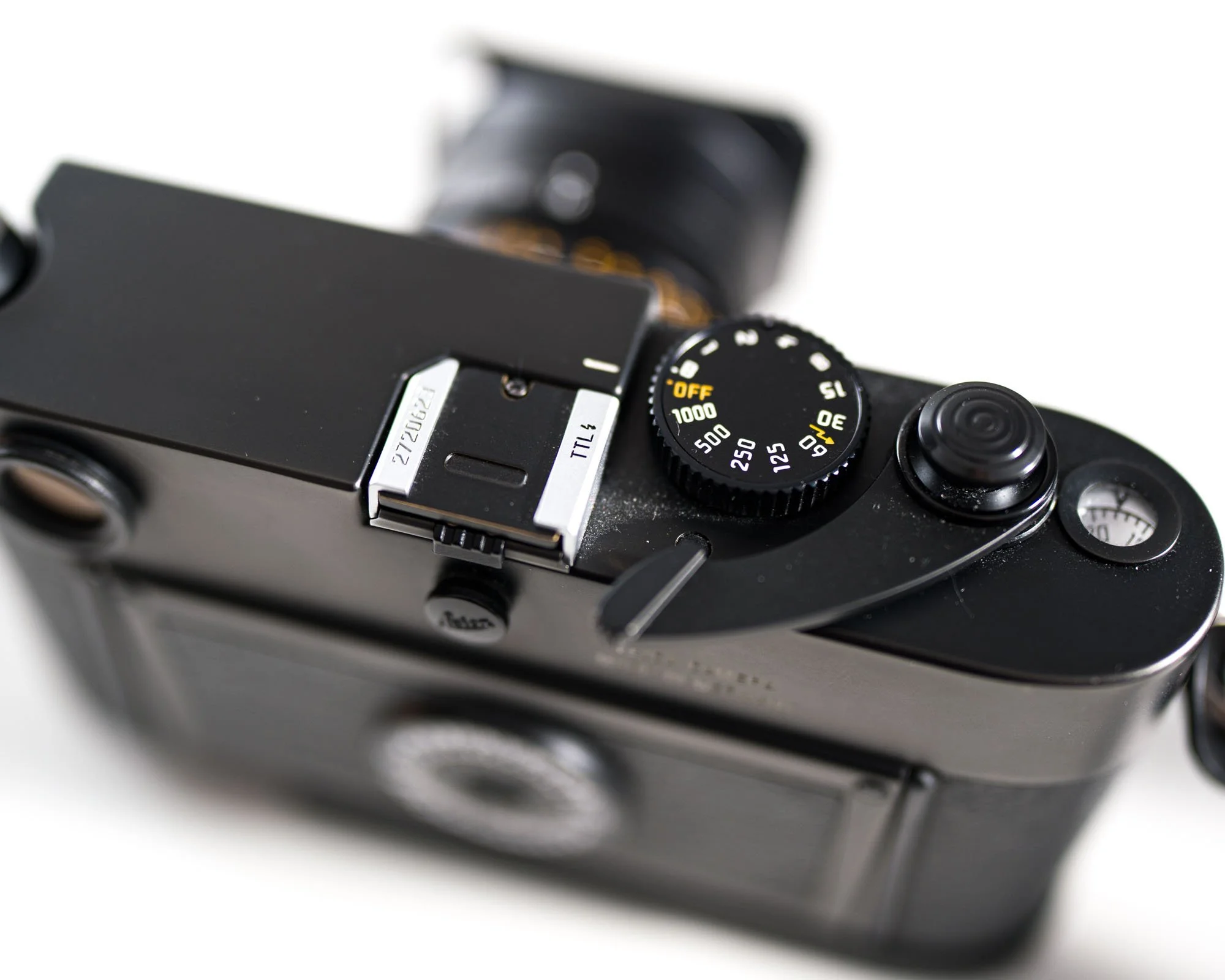
Flash works exceptionally well on this camera, especially with the TTL version. I use the Leica SF24D, which pairs seamlessly with the M6. There are cheaper options for flash, but if you are committing to the Leica system, I think it makes sense to go all in. Using a cord to extend the flash away from the body can improve results, but I also like mounting it on the hot shoe and shooting that way most of the time.
Light Meter
The light meter on the M6 TTL is very accurate. It is located inside the lens and shaped as a circle, which essentially makes it a center-weighted spot meter. I was initially concerned about this, and it can be an issue in certain lighting situations depending on what you are focusing on.
To compensate, I set the ISO on the back of the camera one stop lower so the meter overexposes by one stop in the area it reads. This gives me more consistent results, especially in high-contrast scenes where I want to preserve shadow detail. If you take the time to meter multiple light sources and average the exposure, the meter is very accurate and you would not need to adjust the ISO. I prefer to slightly overexpose the film rather than take the extra time.
One of the biggest advantages of the TTL version is that it shows a circle in the viewfinder when the exposure is correct. I find this much more intuitive than the classic M6, which only shows two arrows when properly exposed.
.58 Viewfinder
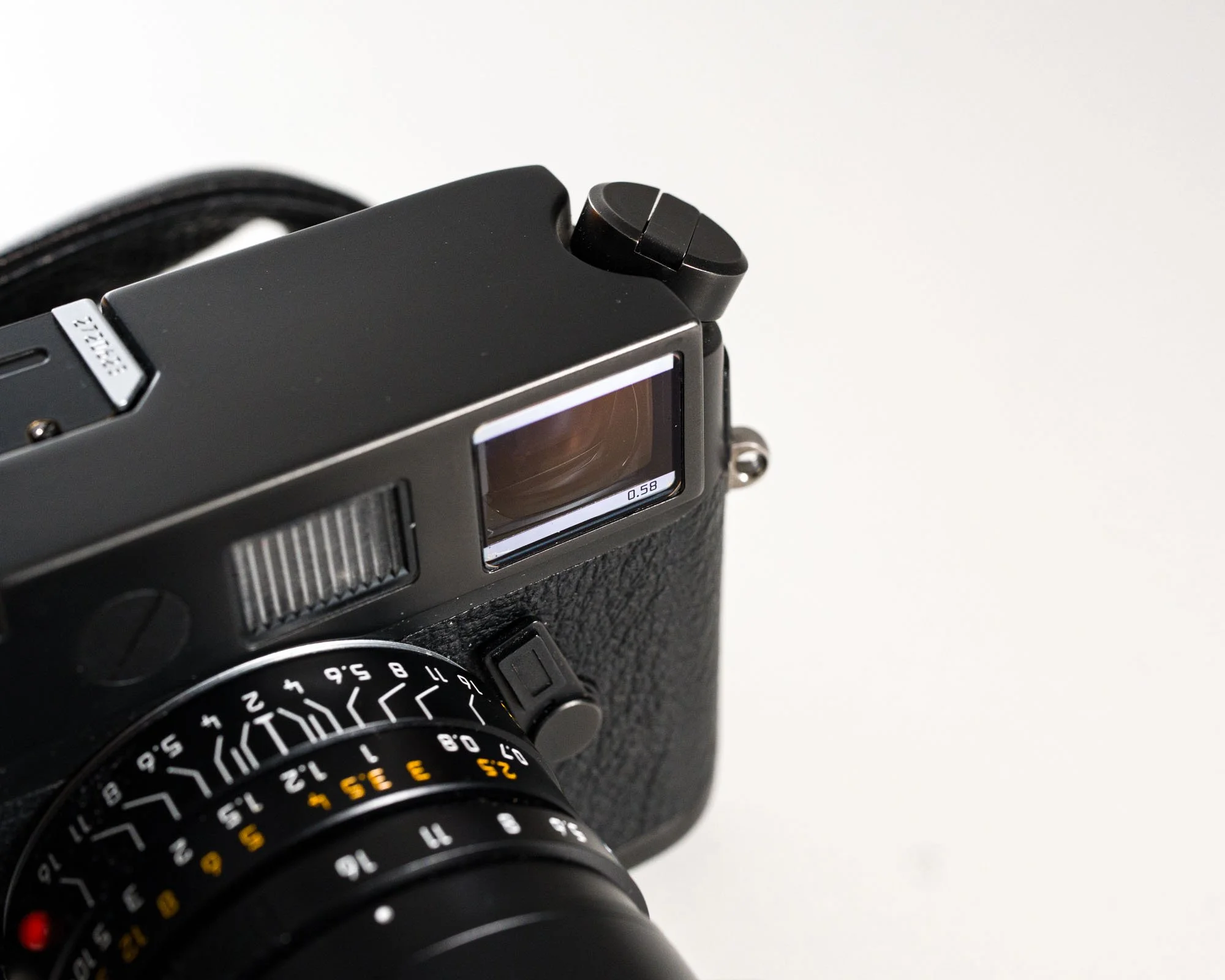
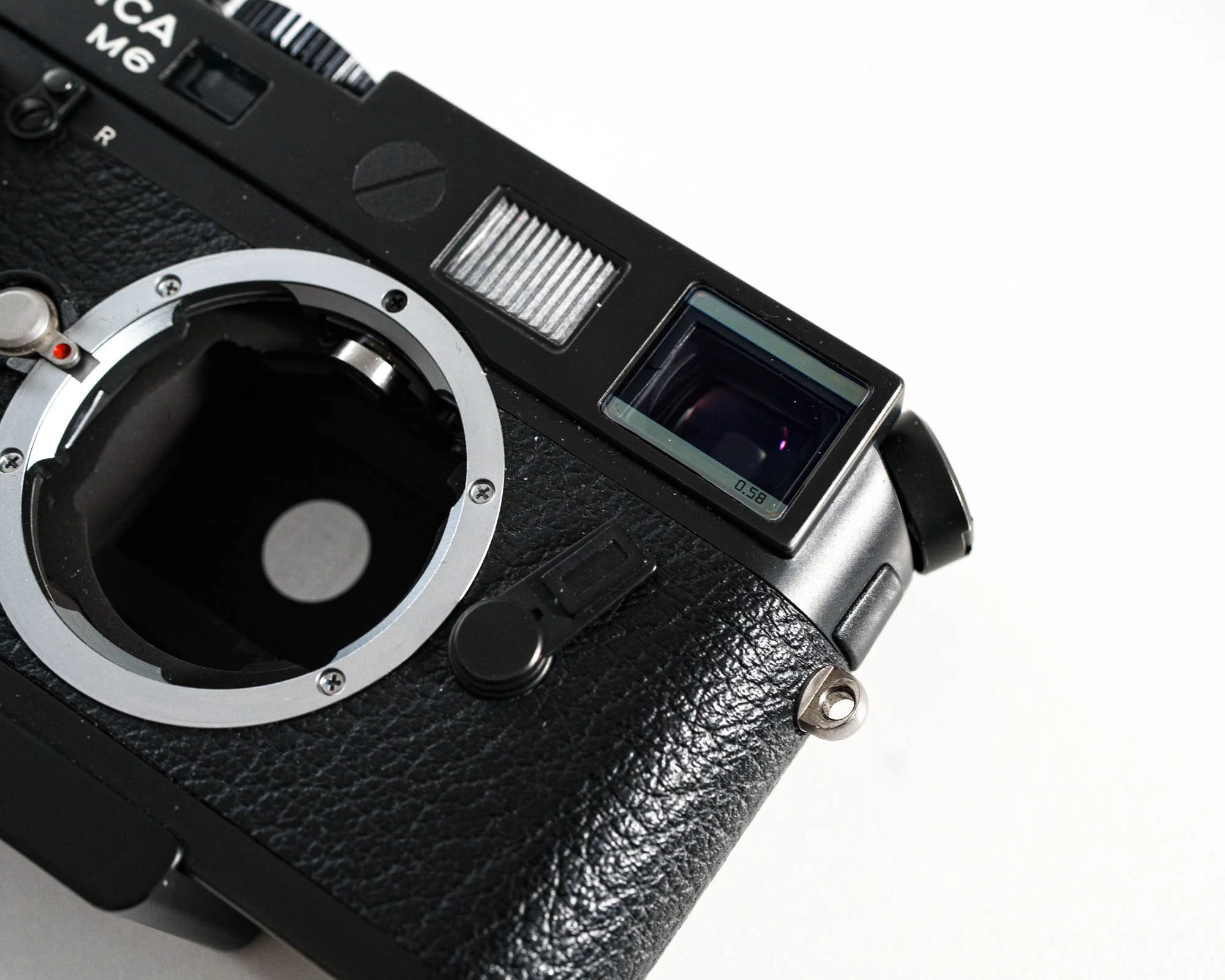
The .58 viewfinder is perfect in a completely different way than the Leica M3’s .91 magnification. The M3 is close to 1.00 magnification, so you can keep both eyes open while shooting and the .91 makes focusing easier.
The .58, on the other hand, is very wide, which means you need to close one eye, but the benefit is that it allows for wider lenses while still being able to compose comfortably. I would not rely on the .58 for focusing at very fast apertures, but the flexibility in lens choice is worth the trade-off for me. In short, the only downside of the .91 is lens choice, and the main advantage of the .58 is the lens options it opens up.
Upgrades
Because I was able to get my Leica M6 at such a good price, I decided to make upgrades I might not normally do. Here is a list of what I completed:
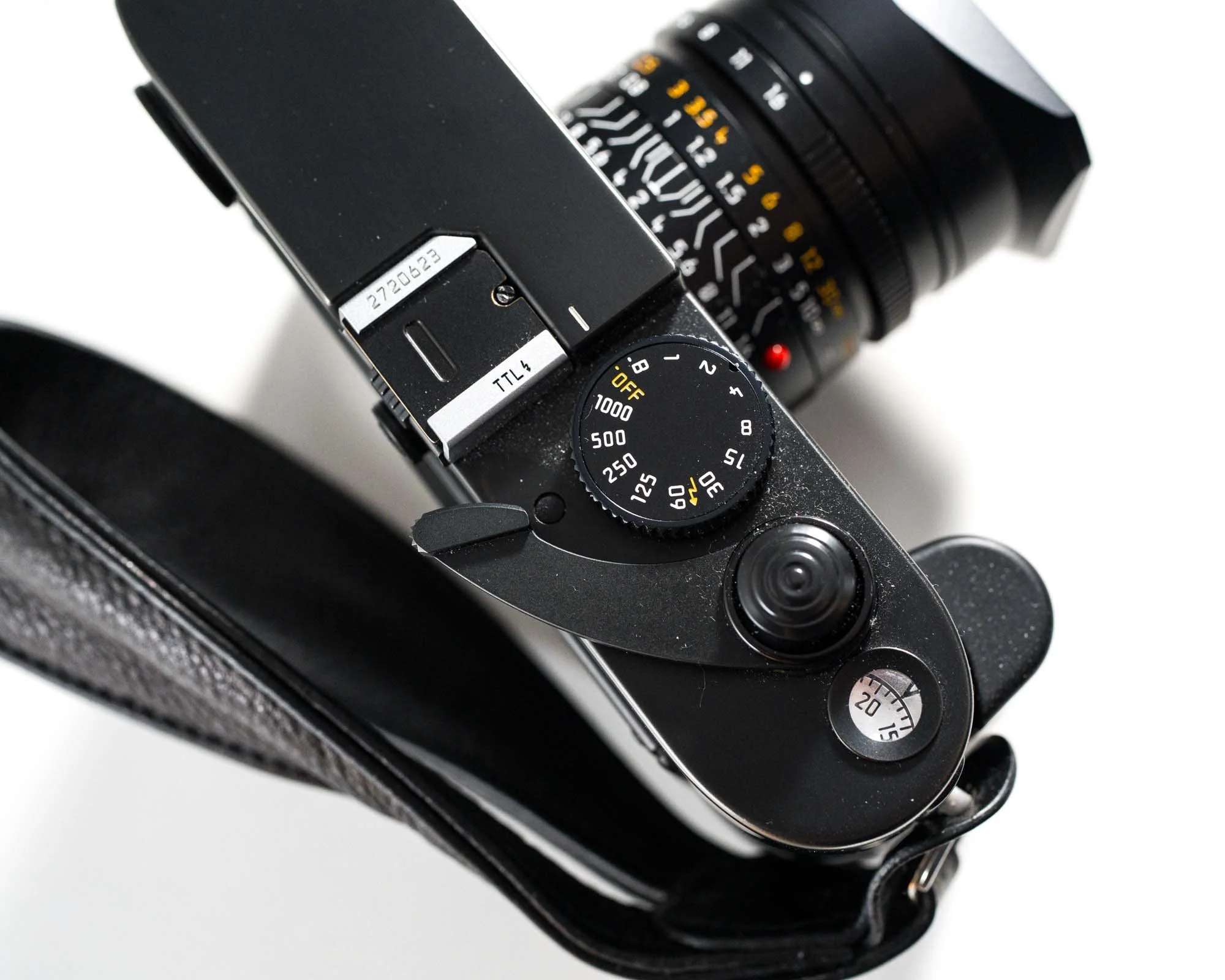
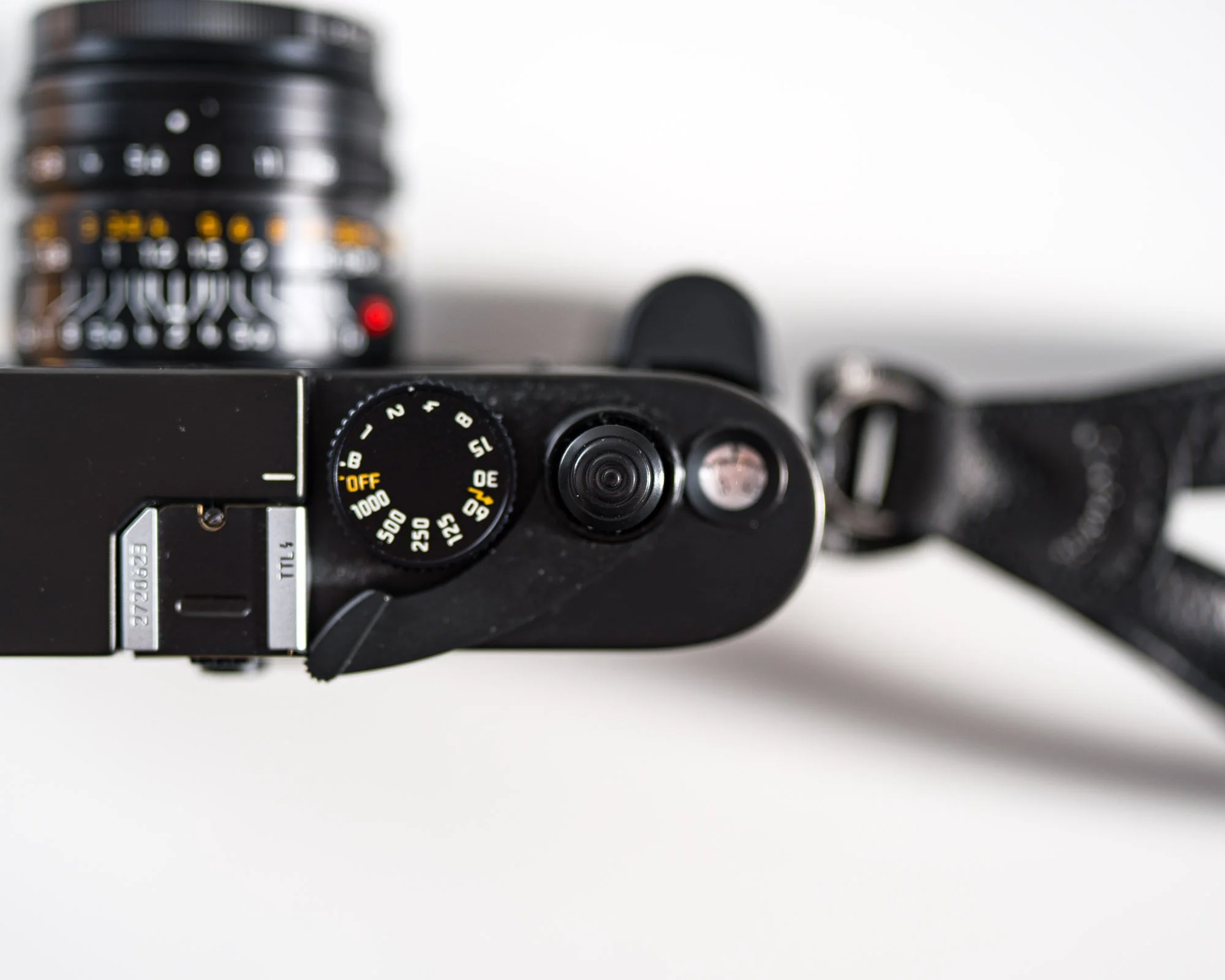
Replaced the M6-style advance lever with an MP-style lever
Replaced the original red Leica logo dot with an Analogous 10mm screw dot
Removed the 135/75 frame lines (done by YYE)
Upgraded the M6 finder to an MP "no flare" finder (done by YYE)
Full CLA (done by YYE)
Accessories
The accessories I have attached to the camera are:
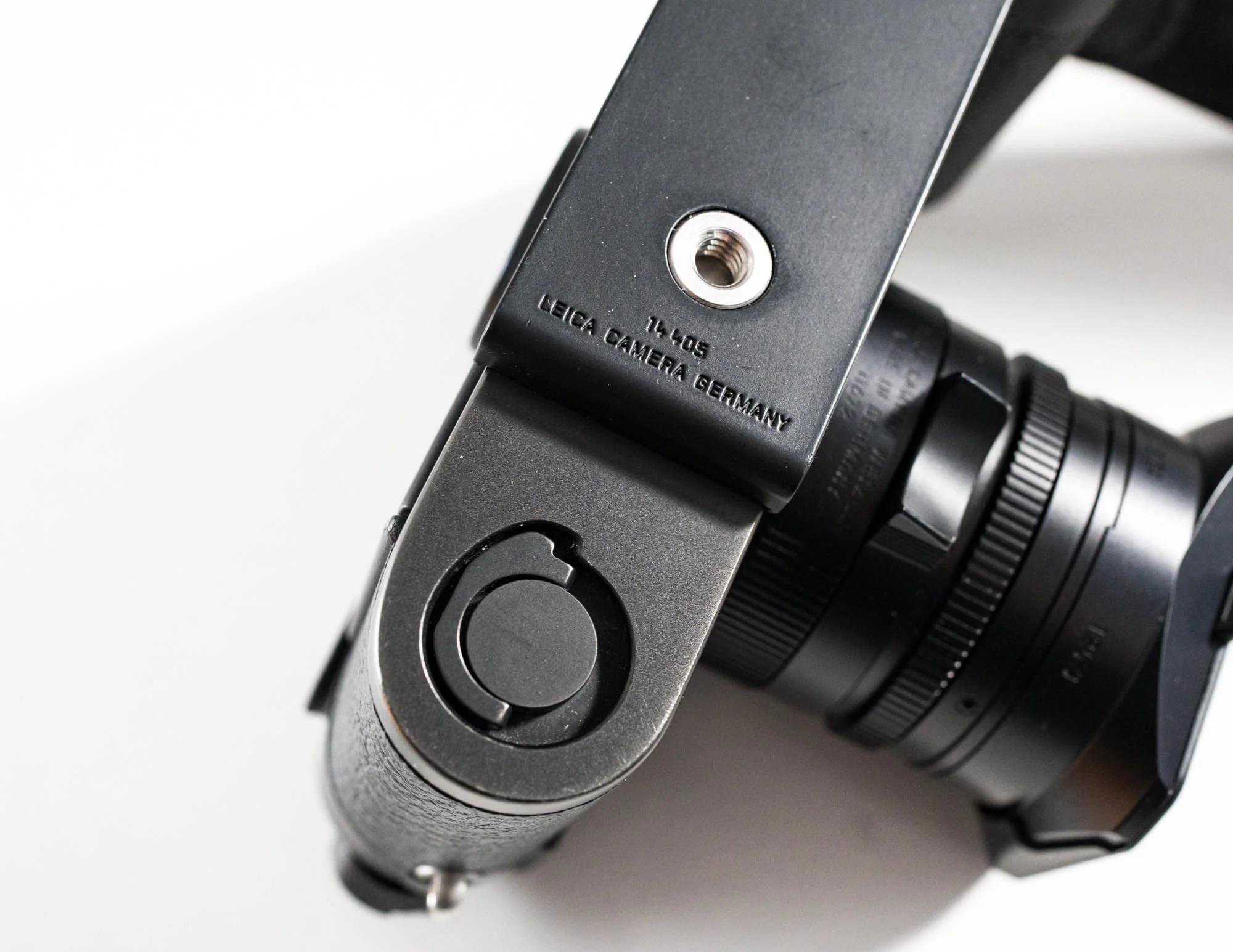
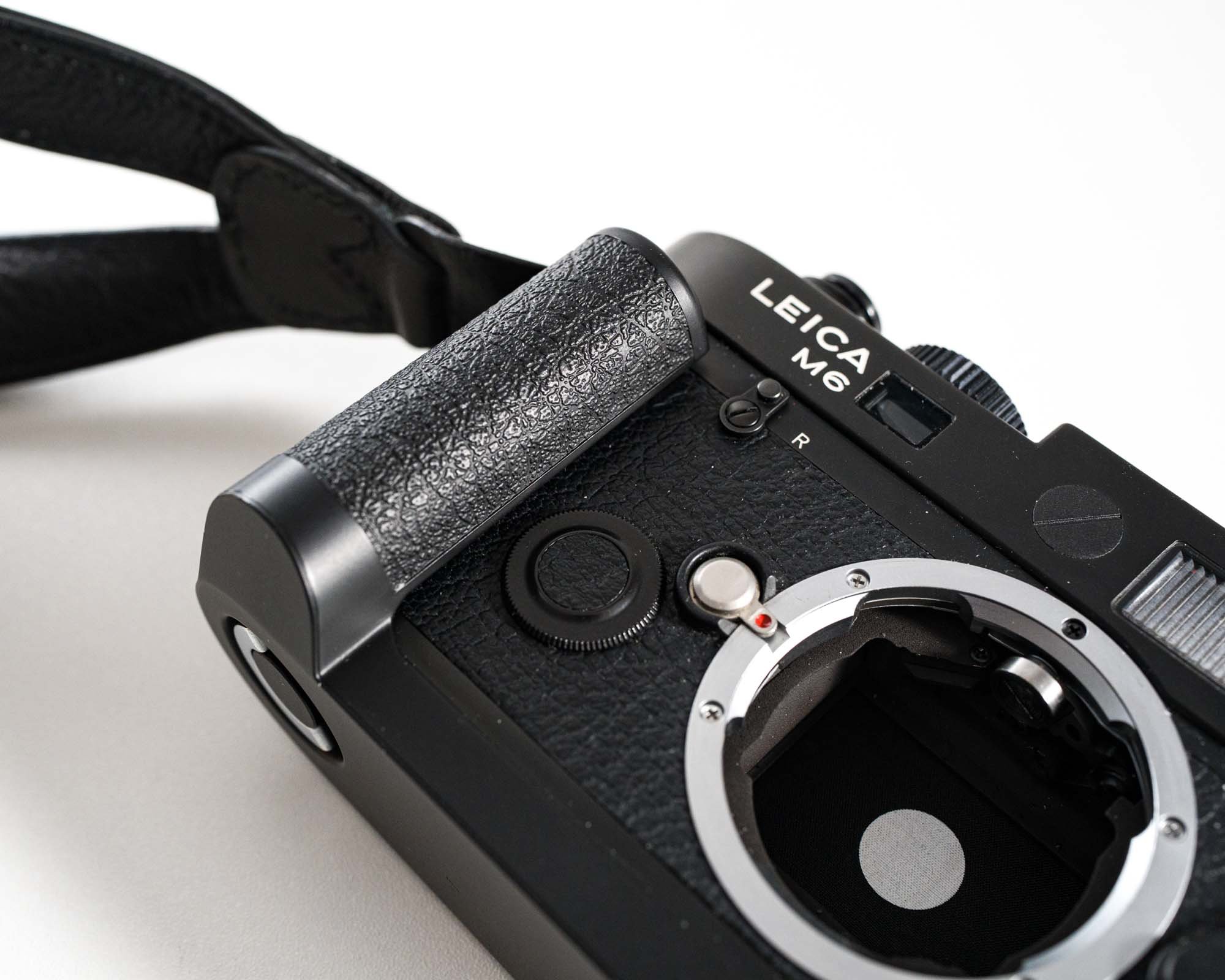
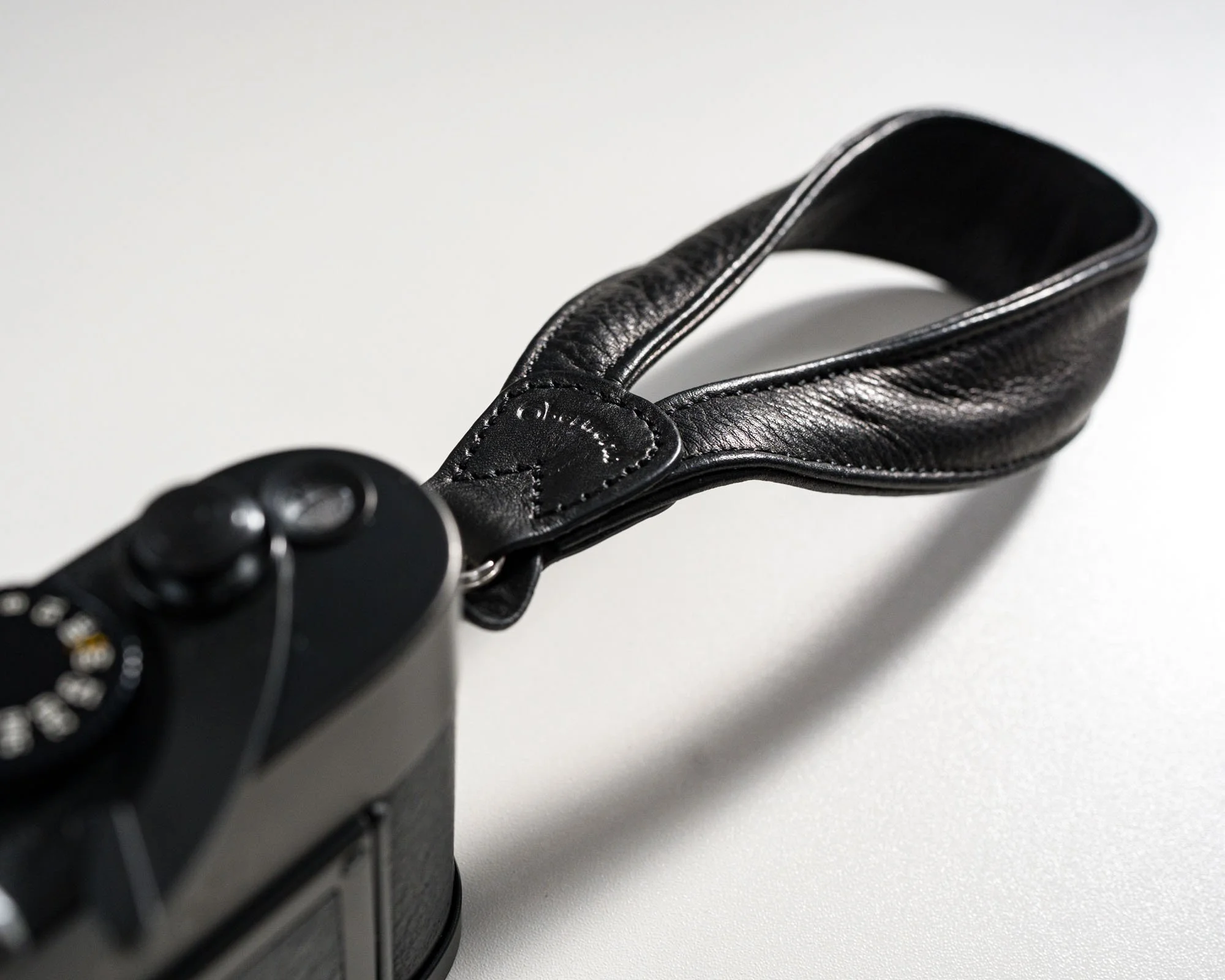
Leica 14405 hand grip
Owlkrown Shutter Topper
Oberwerth Isar hand strap
Brass hot shoe cover from eBay
Future Changes
I think this camera is basically complete for me. I might consider blacking out the white lettering, but that feels like a more permanent cosmetic change I could regret, so I am not committing to it.
The only real upgrades I could see making would be switching to a different body if the right one comes along, such as a Millennium Edition M6 .58 TTL or a Black Paint MP .58, though I doubt either will happen. I would also like to find a way to black out the inner film counter, which is white with black lettering, or replace the silver hot shoe with a black chrome version, but those are not easy changes.
Maybe one day, if I revisit the Leica factory, I will get the top plate engraved, though I have not yet come up with a design I would want on it.
Value
I think a used Leica M6 is still an incredible value. If you have patience, there are plenty of sellers who bought one based on reviews but later realized rangefinder focusing was not for them. I used to spend a fair amount of time browsing marketplaces and other sources for deals, and it was consistently worth the effort.
If you do not have the time to wait for a deal, make sure the camera you buy for a premium price has a recent CLA so you do not need to spend a couple hundred dollars getting it serviced. I would not call the reissue a good value. For the price of a reissue, I would consider a used MP instead, since it is essentially the same camera.
Final Thoughts
The Leica M6 has been my endgame camera. Waiting for this camera to find me, while experimenting with over 50 other film cameras over the years, made me understand why it is the best film camera for me. I love the camera’s strengths as much as I appreciate its quirks and minor issues.
This camera has made me a better photographer. It has saved my wallet by allowing me to sell every other film camera I have ever owned. It has also freed me to shoot more because I spend less time hunting for the right listing and more time planning trips where this camera can truly shine.
I love everything this camera has brought into my life, from the community of people who share the same passion to the images that carry that unmistakable Leica look. Yes, a lot of what people say about the M6 is cliché, but there is a reason for that. Many claim it is the best film camera, I can say with complete confidence that the Leica M6 is the best 35mm film camera ever made for me.
Video Review
Leica M6 Links
Oberwerth Isar Hand Strap | Coupon Code: KYLER10
Owlkrown Shutter Topper | Coupon Code: KYLERSTEELE10

Eight Lightroom Presets by Kyler Steele - Anemoia, Essence, Illume, Kismet, Liminal, Sublime, and Timeless
What are Lightroom Presets?
Lightroom Presets are custom editing settings that instantly apply a specific look or feel to your photos. They help speed up your workflow and maintain consistency with just one click.
What does this purchase come with?
Your purchase includes a ZIP file containing another ZIP file with the customized presets and one PDF instruction guide to help you install and use them properly.
Why Lightroom Presets?
By purchasing these presets, you gain direct access to the exact tones, colors, and adjustments I use in my own work. You can use them to build a cohesive visual style, learn my editing approach, or develop your own signature look.